The breed
The lord of the pastoral mountains
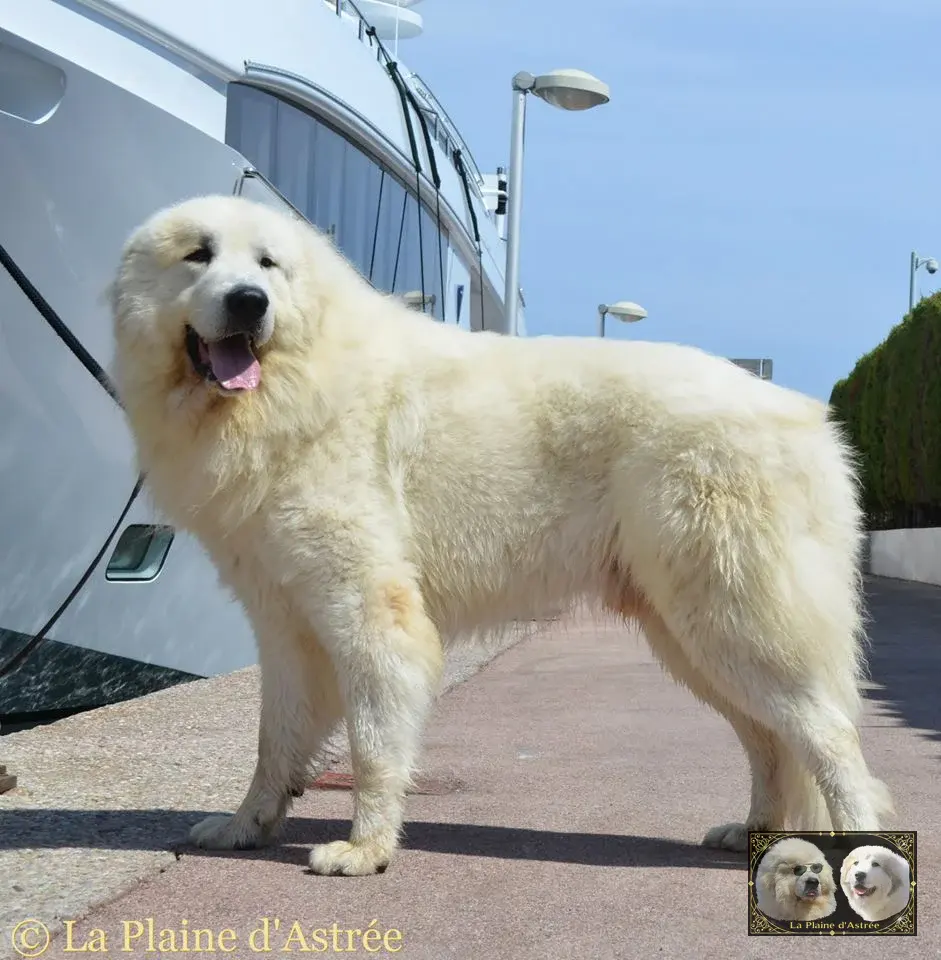
A mountain dog, a guardian, unshakeable: the Pyrenean Mountain Dog has been protecting flocks for centuries. With us, he watches over families too.
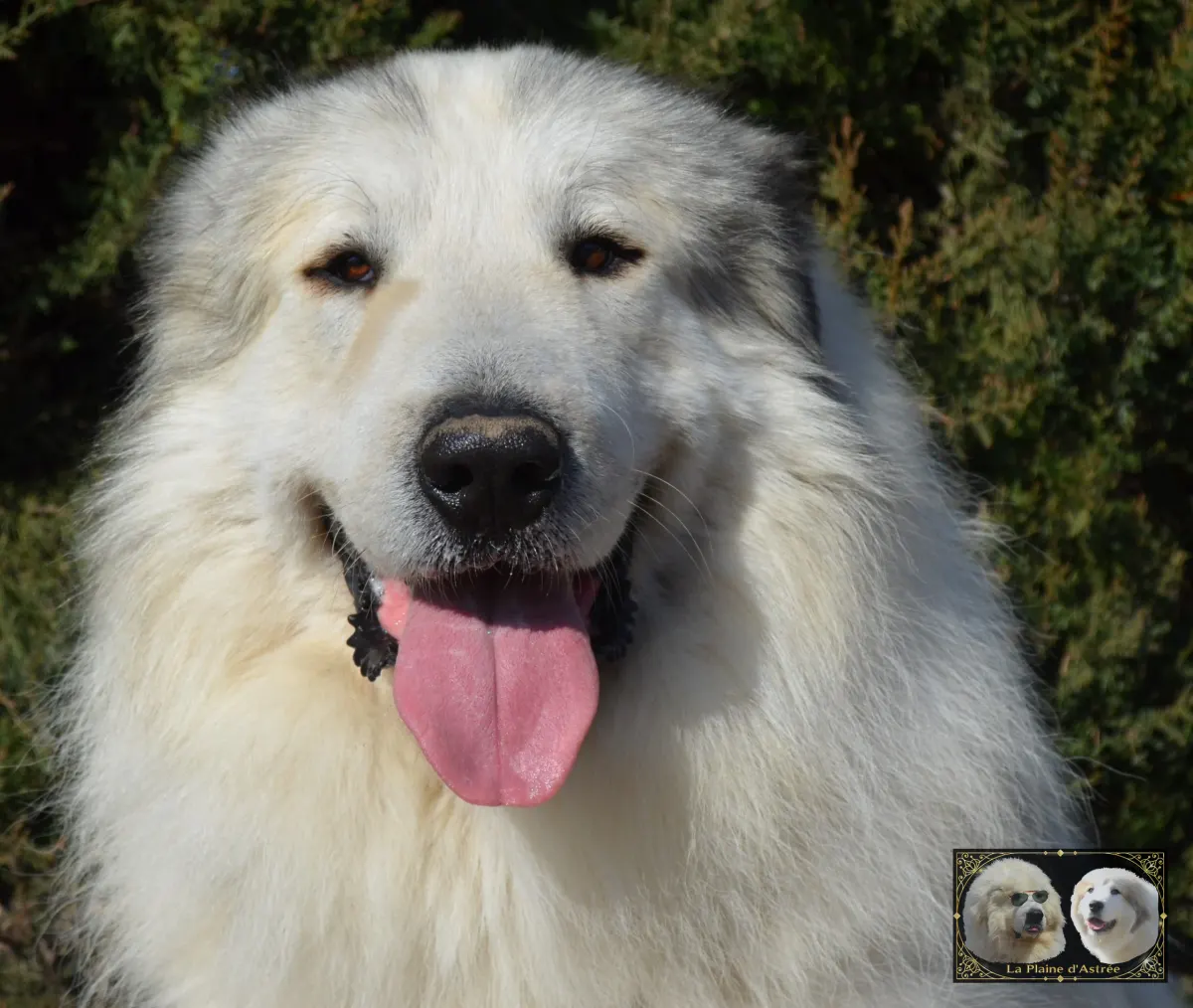
The breed at a glance
- Official name
- Chien de Montagne des Pyrénées known as the Patou
- Standard
- FCI no. 137, Group 2
- Height
- 70 to 80 cm (male), 65 to 75 cm (female)
- Coat colours
- White, or white with badger or arrouye markings (head, ears, root of the tail)
- Coat
- Long, thick, double, weatherproof
- Distinctive feature
- Double dewclaws on the hind legs; tail carried curled over the back when in action, known by the Pyrenean term “Arroundera”
Key points taken from the official breed standard.
The Pyrenean expression
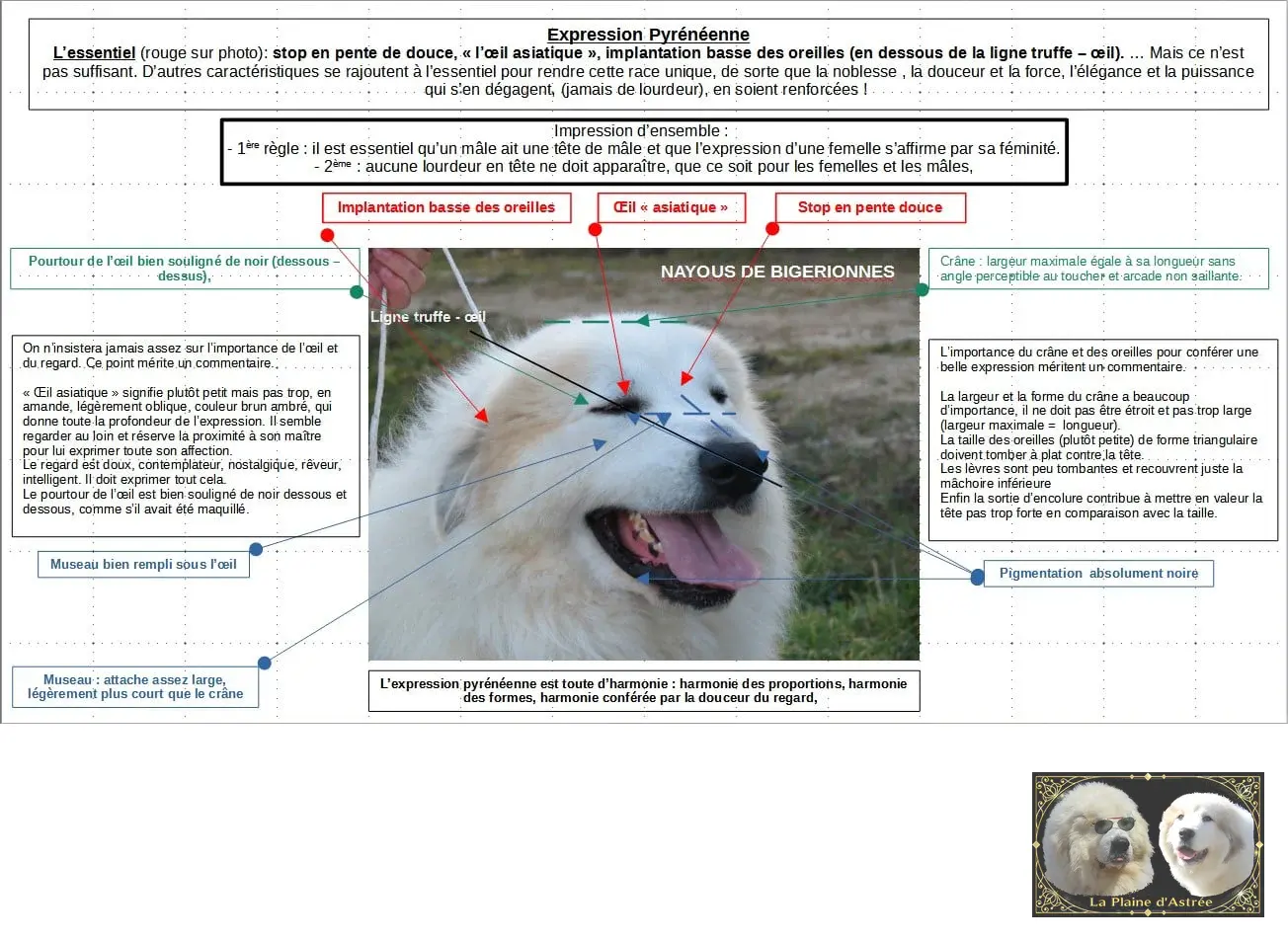
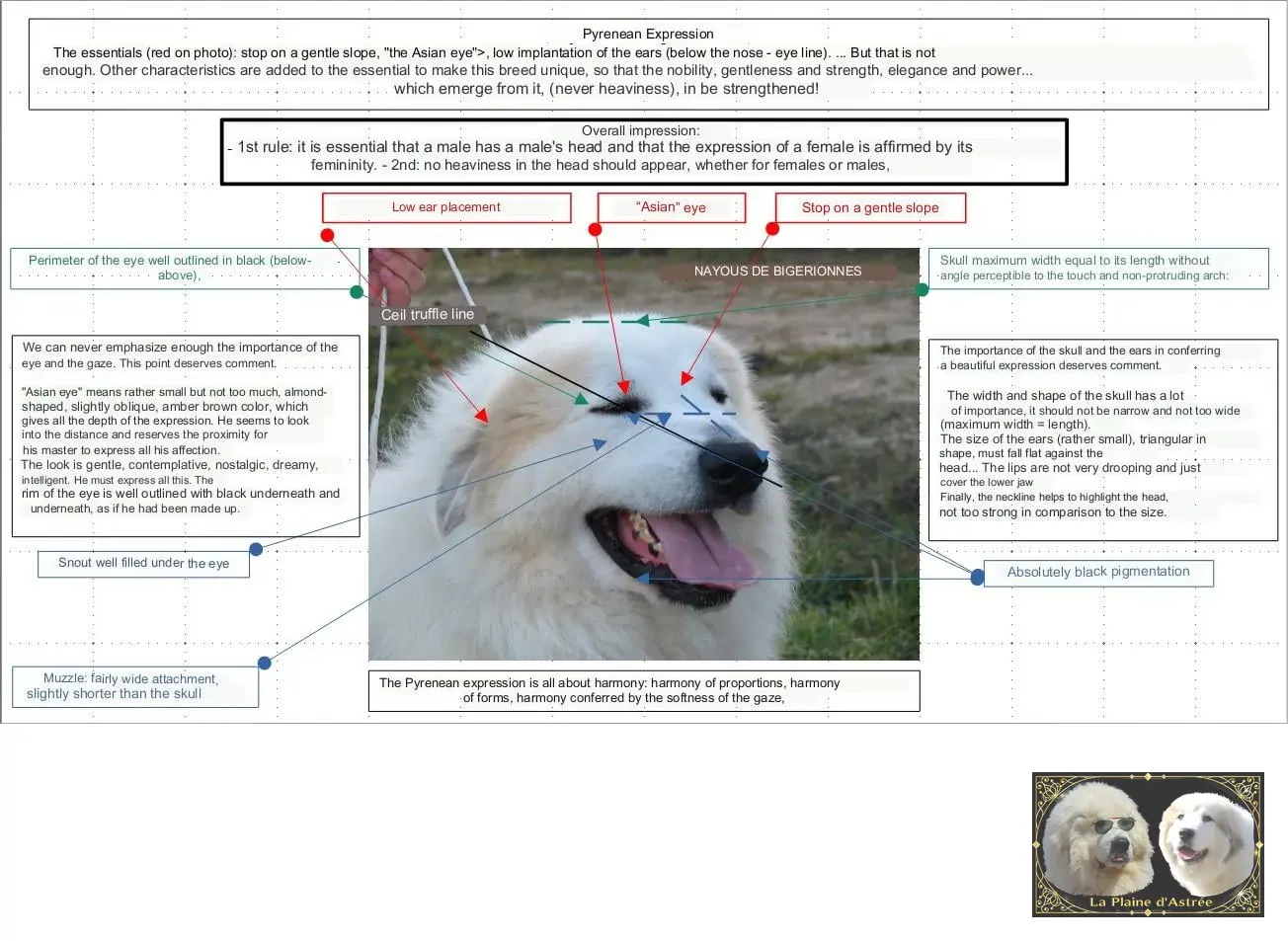
What the standard actually says about the head
FCI standard no. 137 calls for a nose that is black over its whole surface, lips that are black or heavily marked with black, and eyelids edged with black. It lists insufficient pigmentation among the faults of conformity. It does not treat it as proof of crossbreeding: that criterion on its own therefore says nothing conclusive about a dog’s origin.
Soft, dreamy eyes
The eyes sought after are rather small, almond-shaped, slightly oblique and amber brown. Their set and their close-fitting eyelids are part of an intelligent, contemplative and gentle expression. Eyes that are round, light, too prominent or too deep-set are listed as faults, without being, on their own, a reading of a dog’s ancestry.
The lines of the head work as a whole
The head should not look too heavy in relation to the body. The skull is as broad as it is long, slightly rounded, with a gently sloping stop. The muzzle, a little shorter than the skull, stays broad below the eyes and then tapers gradually. The typical expression comes from these proportions, the eyes and the pigmentation agreeing with one another, not from one isolated detail.
Official sources: the FCI standard no. 137 currently in force, also published by the Centrale Canine.
A born guardian, not a dog like any other
The Patou was not built to obey on command: he was built to decide on his own, at night, facing the predator. That is where his nobility comes from, and that is what calls for real thought before adopting one. Well bred and well socialised, he is a remarkably gentle dog with his family, patient with children, and a deterrent to any intruder.
Since 2003 we have been selecting dogs that meet both demands: conformity to the standard, which is judged in the show ring, and working ability, which is proved with the flock. Our puppies grow up in contact with our own sheep.
Our selection
Handsome and sound, in the same dog
A Patou from La Plaine d’Astrée can go up on the podium on the Saturday and go back to the flock on the Sunday. The cotations (the SCC breeding grades) of the breed club, the Réunion des Amateurs de Chiens Pyrénéens, select dogs on that double requirement: conformity, health, offspring. Several dogs from La Plaine d’Astrée have reached Élite A (SCC grade 6), the highest level on the scale.
The questions we are asked
Can the Patou live as a family dog?
Yes, provided there is enough securely fenced space and real socialisation. He is a guardian dog: gentle with his own people, reserved with strangers. He needs access to the house and to be part of family life.
White, badger, arrouye: what is the difference?
These are the coat colours of the standard: pure white, or white marked with grey (badger) or with pale fawn to orange (arrouye) on the head, the ears and the root of the tail. A puppy is usually born with a good many dark patches, which fade over the weeks: heavily marked at birth, by four months he may be almost entirely white or carry only light markings. Colour has no bearing on character or on health.
Is this a dog for guarding flocks?
That is his original job, and some of our puppies do go off to work. We assess every puppy, in particular how drawn he is to the sheep, before pointing him towards a family or towards a sheep farmer.
Would you like to talk it over?
Every plan is different. Write to us: we answer every question, even the awkward ones.
Could this be the right moment?
Meet our puppies
Current litters, puppies on the way and the waiting list: it is all on one page.
Page updated on